


Lithia Toyota of Abilene

Blog / Abilene Toyota Dealer

The Complete Guide to Toyota Hybrids

Toyota builds more hybrid vehicles than almost any other automaker on the road today, and the lineup now stretches from the budget-friendly Corolla Hybrid all the way to the 437-horsepower Tundra i-FORCE MAX. That's a lot of ground to cover, and no two of these hybrids are built for the same driver. At Toyota of Abilene, we get asked constantly which hybrid actually makes sense for a given lifestyle, so we put together this guide to break down every hybrid Toyota currently sells, organized by body style, along with which model wins in categories like price, size, range, and towing. 

Sedans 

Toyota Corolla Hybrid 

The Corolla Hybrid is Toyota's smallest and most affordable hybrid sedan, with pricing starting at approximately $25,000. It returns an EPA-estimated 53 mpg city and 46 mpg highway on front-wheel-drive models, making it one of the most efficient and least expensive ways into a new Toyota. 

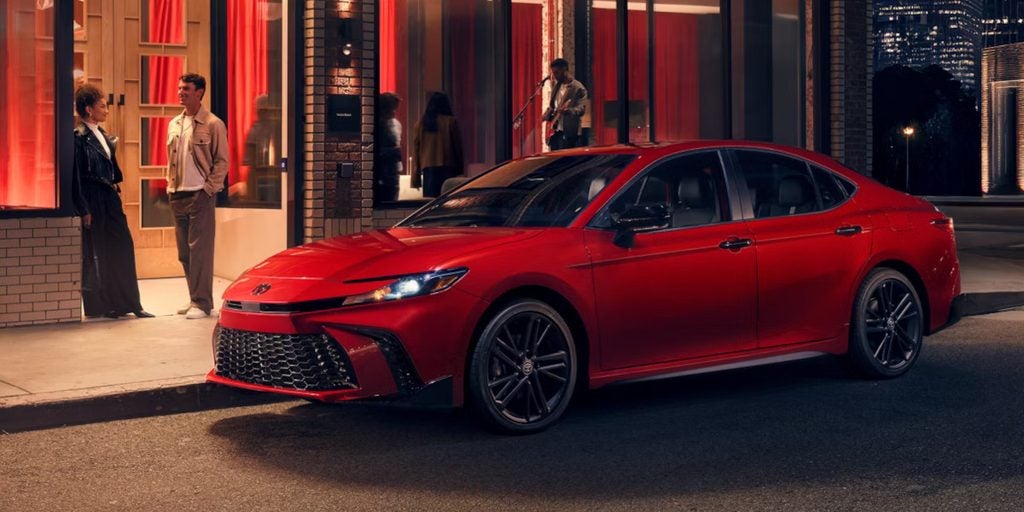
Toyota Camry 

Every 2026 Camry is a hybrid, available in front-wheel drive or all-wheel drive with up to 232 net combined horsepower. Pricing starts at roughly $29,600, and the front-wheel-drive LE is EPA-estimated at up to 51 mpg combined, the highest cited figure of any conventional hybrid Toyota currently sells. 

Toyota Crown 

The Crown is a raised, premium sedan sold with two very different personalities. XLE, Limited, and Nightshade grades use the standard hybrid system with 2.5-liter power, standard all-wheel drive, and an EPA-estimated 41 mpg combined. The Platinum grade swaps in Hybrid MAX, a turbocharged setup good for 340 net combined horsepower and 400 lb-ft of torque, at the cost of dropping to roughly 30 mpg combined. Pricing starts around $42,300. 

Toyota Mirai 

The Mirai isn't technically a hybrid, it's a hydrogen fuel-cell electric vehicle, but it's worth mentioning here since Toyota groups it with its other electrified sedans. It produces zero tailpipe emissions and is rated around 76/71 MPGe city/highway, with pricing starting near $51,800. Fuel cell vehicles are best suited to areas with hydrogen fueling infrastructure. 
Hatchbacks 

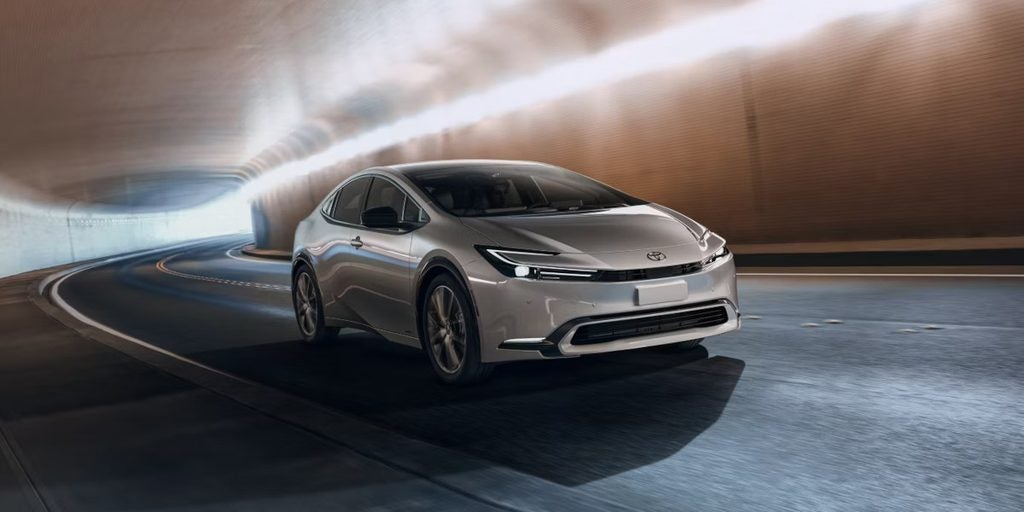
Toyota Prius 

The Prius remains Toyota's efficiency flagship. The base front-wheel-drive grade is EPA-estimated at an outstanding 57 mpg combined, the best fuel economy figure of any model in this guide. Pricing starts in the neighborhood of $28,500 to $29,700 depending on the source and trim. 

Toyota Prius Plug-in Hybrid 

Formerly known as Prius Prime, the Prius Plug-in Hybrid adds a larger battery and a charging port. The SE grade is EPA-estimated at 52 mpg combined with roughly 44 miles of all-electric range and 127 MPGe combined when running on battery power. Pricing starts around $33,800 to $35,000. This is the right pick for anyone who can charge at home or work and wants to run errands on electricity while keeping full gas-engine range for road trips. 
Compact Crossovers and SUVs 

Toyota Corolla Cross Hybrid 

Sitting between the Corolla Hybrid sedan and the RAV4, the Corolla Cross Hybrid offers a higher seating position, standard Electronic On-Demand all-wheel drive, and 196 net combined horsepower. It returns a manufacturer-estimated 42 mpg combined, with pricing starting around $29,600. 

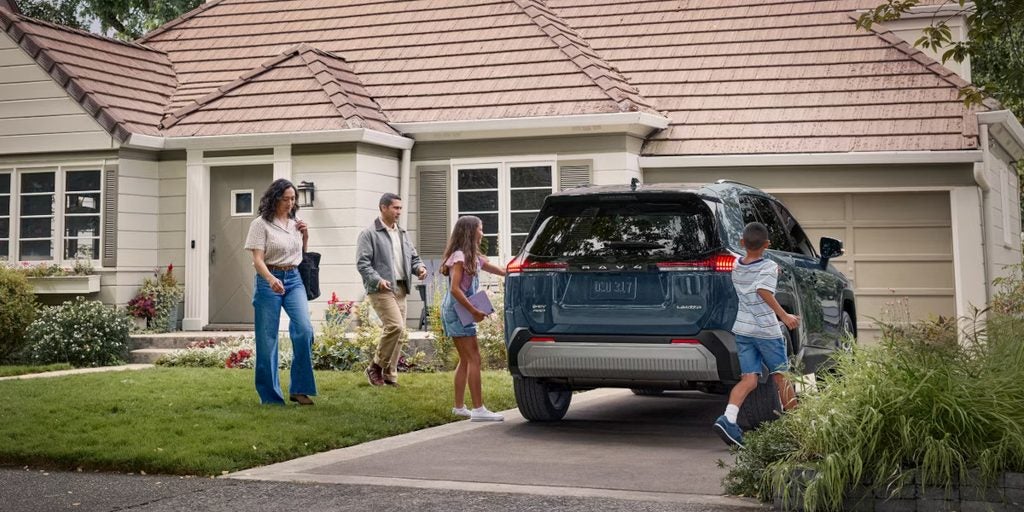
Toyota RAV4 Hybrid 

Toyota's best-selling model is now hybrid-only. The redesigned RAV4 produces 226 horsepower in front-wheel drive or 236 horsepower with all-wheel drive, is the first Toyota to get the newest Toyota Safety Sense 4.0 suite, and starts at roughly $31,900. It's the standard-bearer for compact SUV buyers who want cargo space and higher ground clearance without giving up strong fuel economy. 

Toyota RAV4 Plug-in Hybrid 

The plug-in version of the RAV4 uses a larger battery than the outgoing model for extended electric range, with DC fast charging available on certain grades. Pricing runs well above the standard RAV4 Hybrid, with the top XSE plug-in grade starting near $48,700. This is the pick for someone who wants SUV utility with the option to commute on electricity alone. 

Toyota Crown Signia 

The Crown Signia is a hybrid-only crossover with wagon-like proportions, aimed at buyers who want a raised seating position and upscale styling without stepping into a truck-based SUV. Pricing starts around $44,500. 
Three-Row and Larger SUVs 

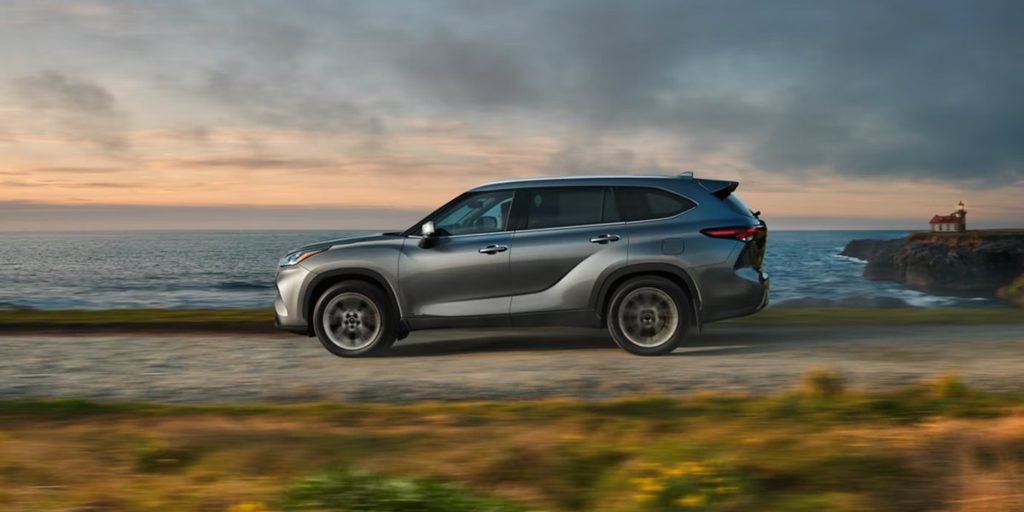
Toyota Highlander Hybrid 

Highlander Hybrid comes in XLE, Limited, and Platinum grades, all with standard Electronic On-Demand all-wheel drive. It seats up to seven standard, or eight with the optional second-row bench, and is rated at a manufacturer-estimated 35 mpg combined. Pricing starts around $48,000. 

Toyota Grand Highlander Hybrid 

The Grand Highlander is the larger, roomier alternative to the Highlander, with up to 97.5 cubic feet of cargo space and seating for seven or eight. The standard 2.5-liter hybrid is rated at a manufacturer-estimated 34 mpg combined and starts around $45,200. Buyers who want more performance can step up to Grand Highlander Hybrid MAX, which jumps to 362 horsepower and a 5,000-pound tow rating, though combined fuel economy drops to roughly 27 mpg. 

Toyota 4Runner i-FORCE MAX 

The redesigned 4Runner's i-FORCE MAX hybrid powertrain produces 326 horsepower and 465 lb-ft of torque from a turbocharged 2.4-liter engine, and comes standard on TRD Pro, Trailhunter, and Platinum grades. Pricing for the hybrid starts around $44,700. This is a capability-first hybrid built for trail driving, not a fuel-economy competitor to RAV4 or Prius. 

Toyota Land Cruiser 

Every 2026 Land Cruiser sold in the U.S. is a hybrid, using the same 326-horsepower, 465 lb-ft i-FORCE MAX system as the 4Runner, paired with full-time four-wheel drive, locking differentials, and Multi-Terrain Select. It's EPA-estimated at 23 mpg combined and starts around $57,900. Land Cruiser prioritizes durable off-road hardware over fuel economy. 

Toyota Sequoia 

Every 2026 Sequoia uses Toyota's twin-turbo V6 i-FORCE MAX hybrid system, producing 437 horsepower and 583 lb-ft of torque, with towing capacity up to 9,520 pounds. Pricing starts around $65,000. Sequoia is the biggest, most powerful, and most capable SUV in Toyota's hybrid lineup. 
Minivan 

Toyota Sienna 

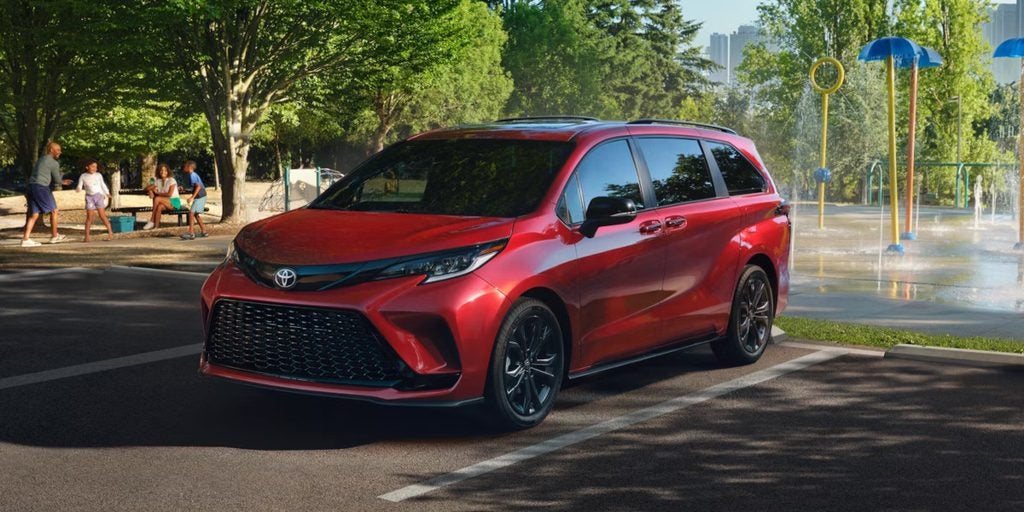
Every 2026 Sienna is a hybrid, and it's the only hybrid-exclusive minivan in its class. It produces 245 net combined horsepower, seats seven or eight depending on configuration, and is EPA-estimated at up to 36 mpg combined on front-wheel-drive models, good for an estimated range of roughly 648 miles per tank. All-wheel drive is available, and every properly equipped Sienna can tow up to 3,500 pounds. Pricing starts around $42,400. 
Trucks 

Toyota Tacoma i-FORCE MAX 

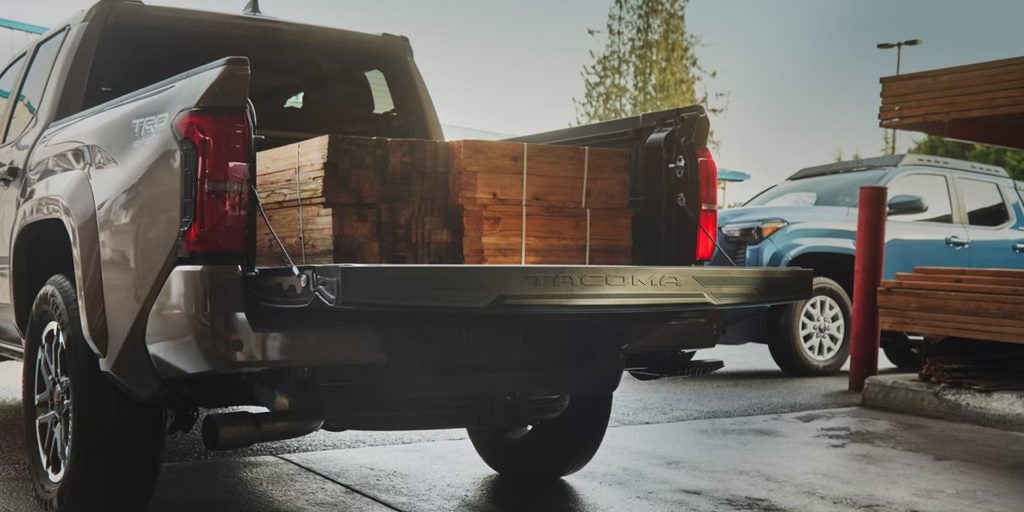
Tacoma's i-FORCE MAX hybrid produces 326 horsepower and 465 lb-ft of torque, is standard on TRD Pro and Trailhunter and available on TRD Sport, TRD Off-Road, and Limited, and includes a standard 2,400-watt AC power supply in the cabin and bed for camping or job-site use. It's EPA-estimated at 23 mpg combined, and pricing starts around $47,000. 

Toyota Tundra i-FORCE MAX 

Tundra's i-FORCE MAX pairs a twin-turbo V6 with an electric motor for 437 net combined horsepower and 583 lb-ft of torque, the same output as Sequoia. Toyota lists a maximum towing capacity of up to 12,000 pounds for the Tundra lineup, the highest of any Toyota hybrid. Hybrid Tundra pricing runs well above the base gas truck; exact starting price depends heavily on cab, bed, and trim, so it's worth speaking with our sales team for a specific configuration. 

Which Toyota Hybrid Is the Best? It Depends on What You Need 

Best fuel economy: The Prius leads the entire lineup at an EPA-estimated 57 mpg combined. If maximum miles per gallon is the only priority, this is the answer. 

Best for long-distance and road-trip driving: The Camry offers nearly Prius-level efficiency (up to 51 mpg combined) with a roomier cabin, a bigger trunk, and a more comfortable ride for hours behind the wheel. For families who need three rows on a long trip, the Sienna's estimated 648-mile range per tank is hard to beat. 

Cheapest: The Corolla Hybrid, starting at around $25,000, undercuts every other hybrid Toyota sells, including the Prius, by a meaningful margin. 

Biggest and most spacious: Among SUVs, the Sequoia is the largest and most capable, with three rows and serious towing muscle. Among cars, the Crown and Camry offer the most interior room in the sedan lineup. 

Best towing capacity: The Tundra i-FORCE MAX tops the lineup at up to 12,000 pounds, ahead of the Sequoia's 9,520 pounds. 

Most horsepower: Tundra and Sequoia i-FORCE MAX are tied at 437 net combined horsepower, the highest output of any Toyota hybrid. 

Best off-road capability: Land Cruiser, with full-time four-wheel drive and locking differentials, edges out the 4Runner i-FORCE MAX for dedicated trail use, though both share the same 326-horsepower system. 

Best for charging at home: The Prius Plug-in Hybrid and RAV4 Plug-in Hybrid are the only two models that let you drive on electricity alone for daily errands while keeping full gasoline range for longer trips. 

Best for families needing three rows: Grand Highlander Hybrid offers the most cargo and passenger flexibility among midsize SUVs, while the Sienna remains the most fuel-efficient way to move seven or eight people. 

Find Your Match at Toyota of Abilene 

With this many hybrids to choose from, the right one really does come down to how you drive. Whether that's a daily commute that rewards every extra mile per gallon, a family that needs three rows and real towing capacity, or a truck that has to work as hard as you do, we have a hybrid built for it. Stop by Toyota of Abilene or contact our sales team to test drive any of the models above and get current pricing for the trim that fits your budget. 
Posted in:

Related Posts

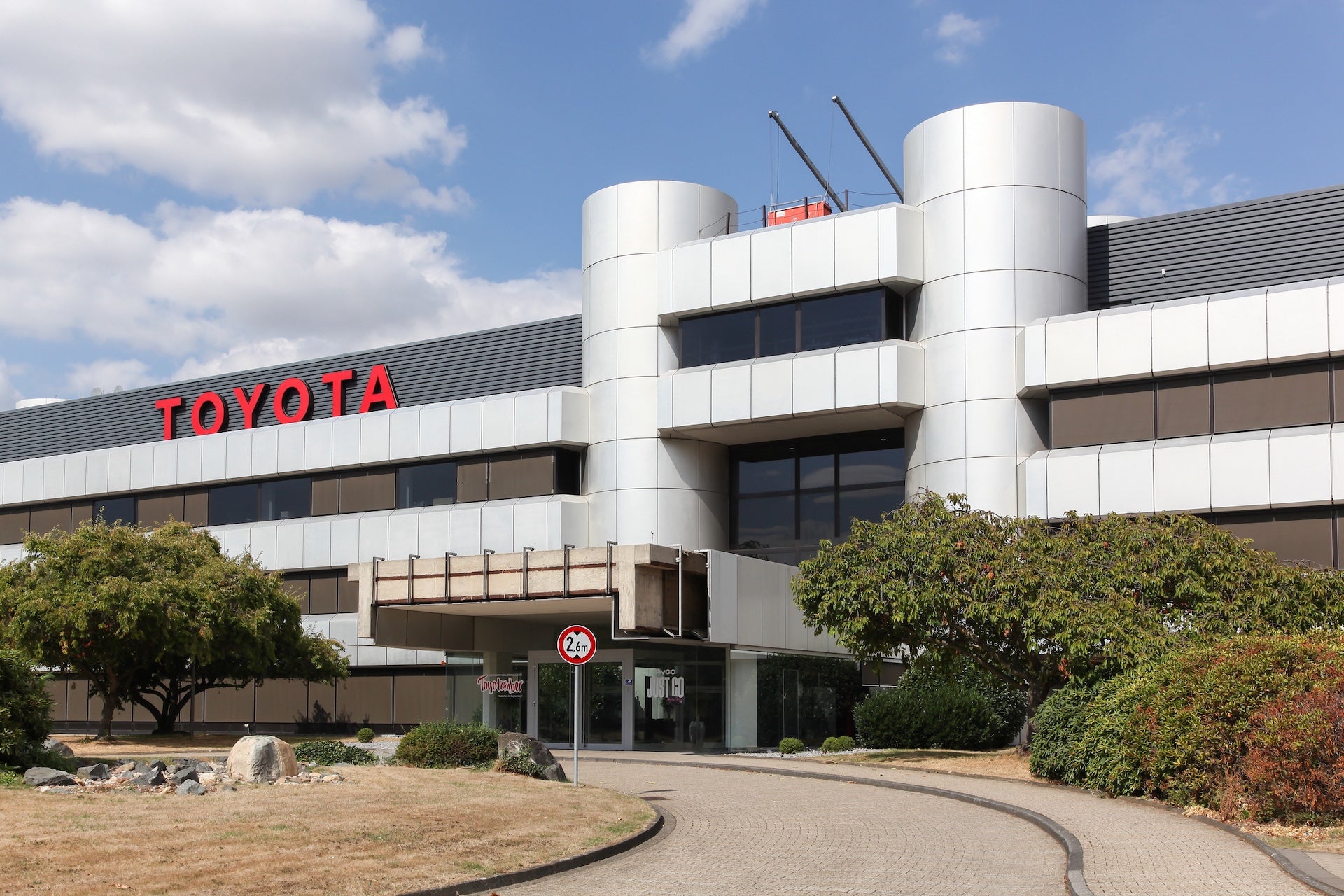
Toyota office building in Cologne. Toyota Motor Corporation is a Japanese automotive manufacturer headquartered in Toyota, Aichi, Japan

Toyota Named the World's Leading Car Brand for 2025

In 2025, Toyota has claimed the title of the world’s most valuable car brand, reflecting its stronghold on the global automotive market. According to Brand Finance’s Global 500 list, Toyota’s brand value surged by 23%, reaching $64.7 billion and earning a coveted AAA+ brand strength rating. This places Toyota at the pinnacle of the auto industry and 18th in the global brand rankings. Toyota’s Road to Success: Innovation, Reliability, and Global Reach Toyota’s journey to the top of the global automotive industry is a testament to its unwavering focus on quality, innovation, and customer satisfaction. Here’s how the brand continues to lead the way: Reliability Meets Innovation Toyota has built its reputation on producing vehicles that stand the test of time. Models like the Corolla, Camry, and Tacoma consistently rank high in reliability surveys, earning the trust of millions of drivers. But Toyota doesn't stop there. The brand is also a pioneer in advancing hybrid technology and pushing toward a carbon-neutral future with developments in fuel cells and water electrolysis systems. A Truly Global Player Toyota’s strength lies not only in the cars it produces but in its ability to connect with consumers worldwide. With 9.25 million vehicles sold by November 2024, Toyota has seen impressive growth in key markets like North America and China. This global adaptability ensures that Toyota vehicles meet the unique needs of drivers across diverse regions. The Power of Brand Loyalty Toyota’s AAA+ brand strength rating and high Brand Strength Index (BSI) score of 92.3 reflect its deep connection with consumers. From excellent customer service to a consistent focus on quality, Toyota’s approach has fostered loyalty and trust, keeping it ahead of the competition. Green Mobility, Done Right While many automakers rushed into fully electric vehicles, Toyota took a more balanced hybrid-first approach, proving that sustainability doesn’t have to compromise performance or reliability. This well-timed strategy has resonated with eco-conscious drivers and positioned Toyota as a leader in green mobility. Expanding Horizons in Motorsport Toyota’s recent return to Formula 1 in collaboration with the Haas F1 Team highlights its dedication to innovation and its ability to engage with motorsport fans worldwide. This move reinforces Toyota’s image as a brand that blends aspiration with accessibility. Outpacing the Competition Toyota’s leadership in the automotive world is further solidified as it outpaces competitors with a clear vision and thoughtful strategies. While other automakers face challenges, Toyota’s ability to combine reliability, innovation, and sustainability ensures its position as the industry leader. The Automotive Industry Impacts Toyota’s leadership in the 2025 Brand Finance rankings highlights a broader shift in the automotive industry. German brands such as Mercedes-Benz, BMW, and Porsche continue to dominate the Top 10 rankings, showcasing their ability to blend luxury with innovation. Meanwhile, Chinese automotive brands are rising rapidly, with BYD emerging as a key player. Focused solely on electric and plug-in hybrid vehicles, BYD is ranked 12th overall and has become the world’s leading EV brand as well as the fastest-growing automaker, posing a strong challenge to legacy giants. Japanese engineering remains highly competitive, with Honda joining Toyota as one of the Top 10 automotive brands, demonstrating Japan’s resilience in adapting to massive technological shifts. Lessons to Learn from Toyota's Achievement Toyota’s success provides a masterclass in building long-term brand value. The company’s consistent focus on innovation, such as hybrid technology and sustainability initiatives, keeps its products relevant and future-proof. By understanding and adapting to varying market demands globally, Toyota has achieved broad appeal, fostering growth and consumer loyalty across regions. Additionally, its emphasis on reliability and service excellence has won customer trust, enabling Toyota to maintain market dominance despite intense competition. Wrapping Up Toyota’s crowning moment as the world’s most valuable car brand of 2025 is a win not just for the automaker, but for the industry at large. It demonstrates the importance of consistency, innovation, and consumer trust in determining long-term success. While competitors might stumble, Toyota’s balanced approach—blending cutting-edge technology, global adaptability, and customer-first strategies—continues to set the standard for the future of mobility. Want to see this innovation in action? Visit Toyota of Abilene today to experience the newest Toyota models like the 2025 Toyota Crown Signa and 2025 Toyota Tacoma and discover what sets them apart from the competition! At Toyota Abilene, we're here to help provide you with the excellence befitting the Toyota name in customer service, auto service, financing, and more. We look forward to seeing you at our dealership in Taylor County today!

red traffic light and Stop sign

Stop on Red Week: Promoting Safety at Intersections

Intersection crashes are some of the most perilous traffic incidents, frequently resulting in serious injuries and fatalities. To increase awareness and encourage safe driving, National Stop on Red Week is observed each year during the first week of August. This initiative is a vital reminder of the importance of adhering to traffic signals and underscores the severe consequences of running red lights. The History and Importance of Stop on Red Week National Stop on Red Week was established by the Federal Highway Administration (FHA) in 1995 to educate the public about the severity of traffic collisions and the role of traffic signals in preventing accidents. The first stop sign appeared in Detroit in 1915, and by the late 1920s, the familiar red background and octagon shape were standardized to minimize confusion and ensure clear communication to drivers. The statistics are alarming. In 2016 alone, 808 people were killed, and 137,000 were injured due to drivers running red lights. Between 2008 and 2021, an estimated 11,296 people lost their lives in crashes related to red-light running. These numbers underscore the critical need for initiatives like Stop on Red Week to remind drivers of their responsibility to follow traffic signals. Why Stop on Red Week is Crucial Traffic signals are not mere suggestions; they are vital control mechanisms that keep intersections safe. Stop on Red Week emphasizes its role in preventing accidents and saving lives by teaching the dangers of reckless driving. Ignoring red lights and stop signs can lead to catastrophic accidents, highlighting the importance of controlled speed and direction at intersections to make roads safer for everyone. While most drivers know basic traffic laws, their significance can sometimes be forgotten, making Stop on Red Week a crucial refresher that underscores why these rules exist and their life-saving impact. Cutting-Edge Car Safety Features Modern technology has brought forth a range of advanced safety features aimed at preventing accidents, particularly at intersections. Here’s a closer look at some of the most effective features related to automatic emergency braking: Blind Spot Detection: Alerts drivers to vehicles in their blind spots, helping prevent side-impact collisions. Forward Collision Warning: Monitors the road ahead and warns drivers of potential collisions, giving them time to react. Brake Assist: Boosts braking power during emergency stops, reducing stopping distances. Adaptive Cruise Control: Automatically adjusts speed to maintain a safe distance from the car ahead, now a standard feature in many new vehicles. Lane Keeping Assist: Helps drivers stay in their lane by providing corrective steering when needed. These features work together to enhance safety and minimize the risk of accidents caused by human error. Be Safe This August with New Safety Features National Stop on Red Week is a vital campaign that highlights the importance of obeying traffic signals and the risks associated with reckless driving. This week-long initiative aims to reduce accidents at intersections and save lives by promoting safe driving practices, increasing public awareness, and encouraging the use of advanced vehicle safety features. At Toyota of Abilene, we are proud to offer Kia cars equipped with some of the best safety features on the market. Regardless of the type of vehicle you currently own or are considering, our cars come with Toyota Safety Sense, which includes the Pre-Collision System and Lane Tracing Assist with Steering Assist features in most new models. Trade in your outdated car today and upgrade to enhance your safety on the road this Stop on Red Week!

A Caucasian girl is sitting in a new car. She is wearing a graduation robe and cap. She is smiling out the window while holding her keys.

The Best Toyotas to Buy 2024 Graduates

With May comes the flurry of graduation ceremonies, marking both endings and beginnings. Whether your graduate is bidding farewell to high school or university, it's a moment steeped in nostalgia and anticipation. But as they embark on the next phase of their journey, a reliable vehicle becomes an essential companion. If you're in the market to gift your graduate with a new car or SUV, there are key considerations to keep in mind: fuel efficiency, storage capacity, technological advancements, and, of course, safety features. Whether they're off to college or diving into post-graduation adventures, ensuring they're equipped for the road ahead is paramount. For utmost peace of mind, look no further than these two top picks approved by Kelley Blue Book, readily available at Toyota of Abilene: your go-to destination for new graduate wheels. The 2024 Toyota Corolla Whether your graduate will stay local at McMurry in town or is gearing up for their inaugural semester away, the steadfast Toyota Corolla promises to keep them seamlessly connected. Boasting Bluetooth with voice recognition, Apple CarPlay, Android Auto, and Amazon Alexa integration, staying in touch has never been easier. Modern conveniences like automatic climate control, remote keyless entry, and a rear-seat center armrest add to its allure. With an EPA-rated combined fuel economy of 35 mpg, the Corolla ensures fewer stops at the pump, leaving more room for adventure. Safety takes center stage with the Corolla, recognized as an IIHS Top Safety Pick. Every variant of the 2024 Toyota Corolla comes equipped with Toyota's Safety Sense 3.0, a comprehensive suite of driver assistance features including: Pedestrian detection Automatic emergency braking Adaptive cruise control Lane-departure warning Lane-keeping assist Traffic sign recognition Automatic high beams The 2024 Toyota Prius Much lauded as the recent recipient of MotorTrend Car of the Year, the 2024 Toyota Prius stands as a beacon of hybrid excellence. While it may come at a slightly higher price point than the Corolla, the Prius remains unrivaled in its hybrid capabilities, making it an ideal companion for campus life. Following a redesign in the 2023 model, it boasts a sleeker, more elongated profile without compromising its impressive combined driving fuel economy of 57 mpg. For those braving wintry terrains, an optional AWD variant ensures added traction and confidence. Also honored as an IIHS Top Safety Pick, every trim level of the 2024 Prius includes an array of safety features such as automatic emergency braking, pedestrian detection, lane-departure warning with steering assist, adaptive cruise control, lane-keeping assist, high-beam assist, blind-spot monitoring, and rear cross-traffic alert. Send Them Off in Style Toss your caps, turn your tassels, and bid farewell to the nostalgic strains of that ubiquitous Vitamin C song. As you step into the realm of post-graduate car ownership, begin your journey at Toyota of Abilene, where a world of automotive excellence awaits. If you’re looking for a new or used Toyota for your graduate, you’ve come to the right place. We won't be satisfied until we pair them with a vehicle that exceeds your safety standards. Sleep easier knowing your son or daughter is driving a tried-and-true vehicle by visiting Toyota of Abilene.

Service Directions